- Regular cleaning prevents odors and mold: Front-load washers are especially prone to mold in the gasket, while residue can build up in any machine, affecting laundry freshness.
- Understand your machine type: Cleaning methods differ for front-load and top-load washers; front-loaders need more attention to seals and gaskets, while top-loaders focus on drum walls and detergent compartments.
- You can clean naturally or with chemicals: Vinegar, baking soda, lemon juice, and essential oils provide effective home-friendly solutions, while commercial cleaners, bleach, or descalers handle stubborn build-up.
- Follow a thorough cleaning routine: Prepare the machine, clean detergent drawers, wipe the drum and door, run cleaning cycles, and check filters and hoses to maintain optimal performance.
- Address odors, mold, and mildew proactively: Regularly clean gaskets, run hot water cycles with vinegar, and check the drain pump filter to prevent lingering smells and bacteria.
- Manage hard water and soap scum: Use vinegar soaks, descalers, and correct detergent amounts to prevent mineral deposits and maintain washing efficiency.
- Maintain with small habits: Wipe down the drum and door after use, leave the door slightly open, rinse drawers weekly, and inspect filters monthly to avoid deep cleaning problems.
Keeping your washing machine clean might not be the first thing on your home maintenance checklist, but it should be. Over time, residue, soap scum, hard water deposits, and even mold can accumulate inside your washer. This build-up not only causes unpleasant odors but can also affect your laundry’s cleanliness and even shorten your machine’s lifespan. Whether you have a front-load or top-load washing machine, this guide will walk you through everything you need to know about cleaning your washer effectively.
Why Should You Clean Your Washing Machine?
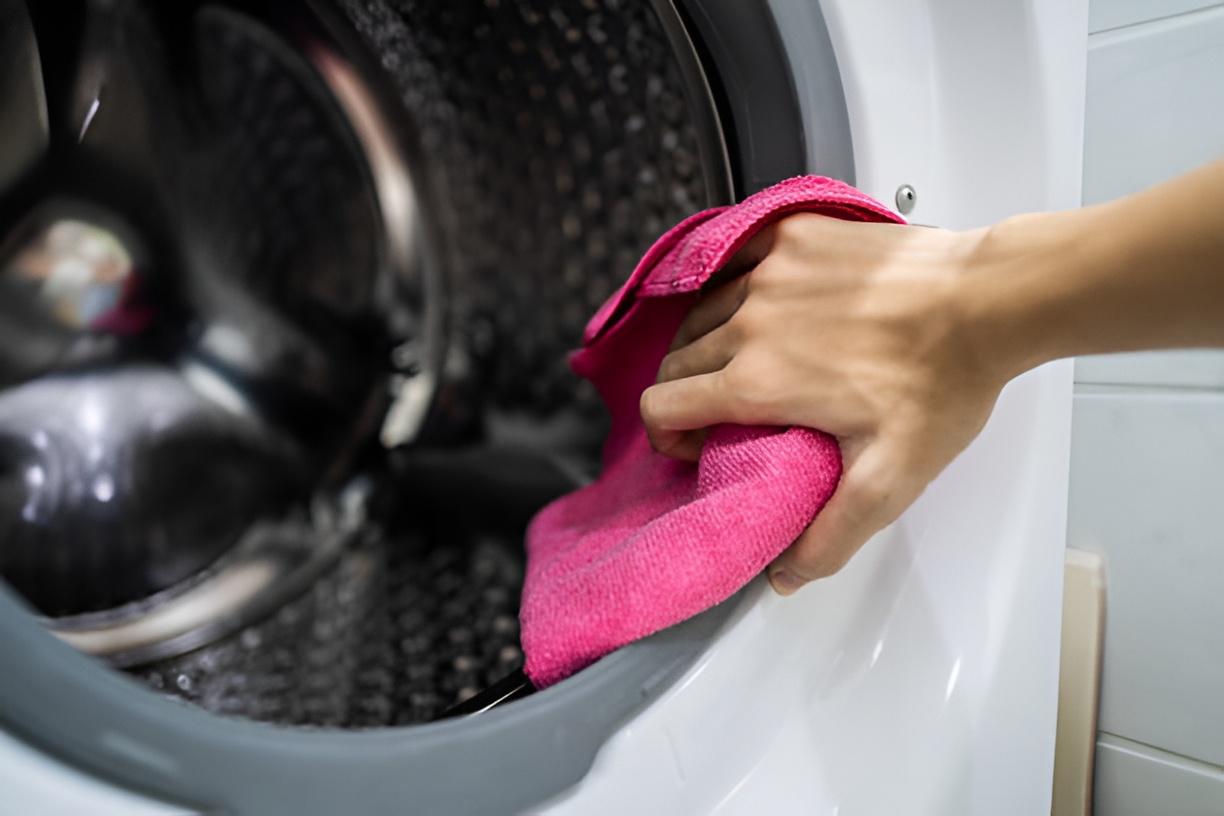
You might think your washing machine cleans your clothes, so why would it need cleaning itself? Here’s why:
- Prevent odors: Mold and mildew thrive in damp, enclosed spaces like washing machines, especially front-loaders with tight seals.
- Improve washing efficiency: Soap scum, detergent residue, and mineral deposits can reduce your machine’s cleaning power.
- Extend machine lifespan: Regular cleaning reduces wear and tear, keeping your washer running smoothly longer.
- Protect your clothes: Residue or mold in the machine can transfer to your laundry, leaving stains or an unpleasant smell.
Cleaning your washing machine regularly is one of the simplest ways to protect your home investment and keep your laundry fresh.
What’s the Difference Between Front-Load and Top-Load Machines?
Front-load and top-load washers each have unique cleaning challenges. Knowing these differences will help you choose the best cleaning method for your machine.
Front-Load Washers
- Tend to develop mold and mildew in door gaskets and seals.
- Use less water, so detergent residue can build up more quickly.
- Require periodic deep cleaning to prevent odors.
Top-Load Washers
- Easier to maintain because the drum is vertical and drains more efficiently.
- Less prone to mold but can still accumulate soap scum and hard water deposits.
- Lint traps and detergent drawers still need regular cleaning.
Understanding your machine type ensures you address the right areas when cleaning.
How Often Should You Clean Your Washing Machine?
Frequency depends on usage, but general recommendations are:
- Monthly: Quick wipe-downs of the drum, door, and detergent drawer.
- Every 3–6 months: Deep cleaning to remove buildup and odors.
- Immediately: If you notice bad smells, residue on clothes, or mold growth.
Regular maintenance prevents problems before they become serious.
Can You Clean a Washing Machine Without Harsh Chemicals?
Absolutely! Many effective home-friendly cleaning solutions are non-toxic, affordable, and safe for your machine.
Natural Cleaning Methods
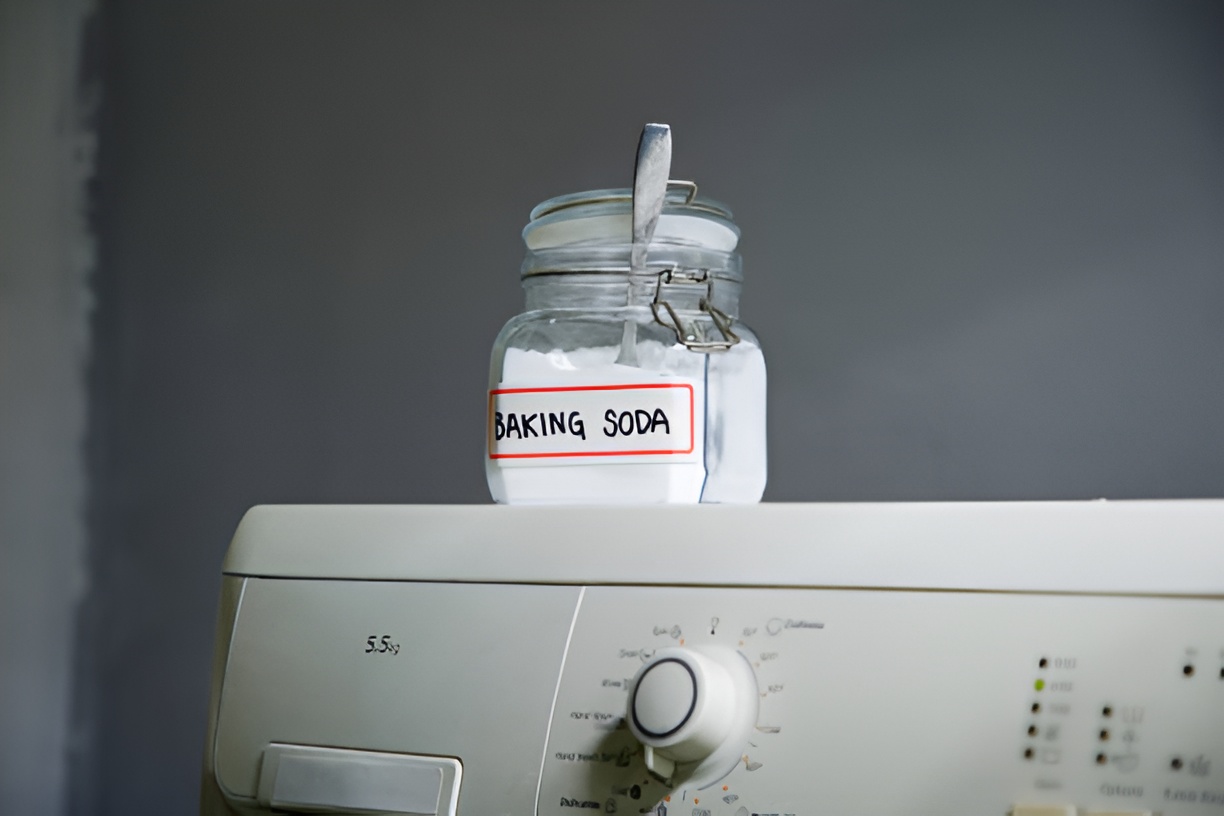
- Vinegar and Baking Soda
- Add 2 cups of white vinegar to the detergent drawer.
- Run the washer on the hottest and longest cycle.
- Sprinkle ½ cup of baking soda directly into the drum and run another hot cycle.
- Wipe down the drum and gasket afterward.
- Lemon Juice or Hydrogen Peroxide
- Lemon juice acts as a natural disinfectant and deodorizer.
- Hydrogen peroxide helps kill bacteria and mildew.
- Use 1 cup during a hot water cycle for added cleaning power.
- Essential Oils (Optional)
- Add a few drops of tea tree or lavender oil to the vinegar cycle for extra freshness and antibacterial properties.
These methods are gentle on your machine, eco-friendly, and safe for your family.
When Should You Use Chemical-Based Cleaners?
While natural solutions work well, sometimes stubborn build-up or heavy odors require commercial products.
- Washing machine cleaners: Available in tablets, powders, or liquids specifically designed for removing grime, mold, and hard water deposits.
- Bleach: Can disinfect and remove mold stains, but use sparingly and follow manufacturer guidelines.
- Descaling agents: Useful in areas with hard water to remove mineral deposits.
Always read instructions carefully and never mix bleach with vinegar or other cleaners, as this can create harmful fumes.
Step-by-Step Guide: How to Clean a Washing Machine Thoroughly
Here’s a comprehensive walkthrough that works for both front-load and top-load washers. Follow each step carefully to get the best results.
1. Prepare Your Machine
Before you start cleaning, it’s important to set the stage:
- Empty the washer completely: Remove all clothes, laundry bags, and any small items left in the drum. Cleaning a full drum won’t be effective and may damage your machine.
- Remove detergent and fabric softener residue: Pull out detergent drawers and check for stuck soap or softener deposits. These build-ups can cause odors and clogging if left unattended.
- Inspect the drum and door seal: Look for mold, mildew, or debris, especially in the folds of front-load washers. Use a flashlight if needed. Early detection helps prevent stubborn stains and smells later.
- Gather your cleaning supplies: You’ll need white vinegar, baking soda, a soft cloth or sponge, mild dish soap, a toothbrush, and optionally a commercial washing machine cleaner.
2. Clean the Detergent Drawer
The detergent drawer is one of the dirtiest spots in your washing machine. Here’s how to clean it thoroughly:
- Remove the drawer: Most are easy to pull out by pressing a release tab. Check your washer’s manual if you’re unsure.
- Soak the drawer: Fill a basin with warm water and mild dish soap, and let the drawer soak for 10–15 minutes. This loosens hardened detergent and softener residues.
- Scrub corners and crevices: Use a toothbrush to scrub the nooks where mold and residue hide. Don’t forget the underside and the drawer slot in the machine.
- Rinse and dry: Rinse the drawer thoroughly under running water to remove soap and residue. Dry completely with a clean towel to prevent mold growth before reinserting.
Pro tip: For persistent residue, sprinkle a little baking soda into the drawer before scrubbing—it’s gentle but highly effective.
3. Wipe Down the Drum and Door
Cleaning the drum and door is essential to remove hidden grime and prevent odors.
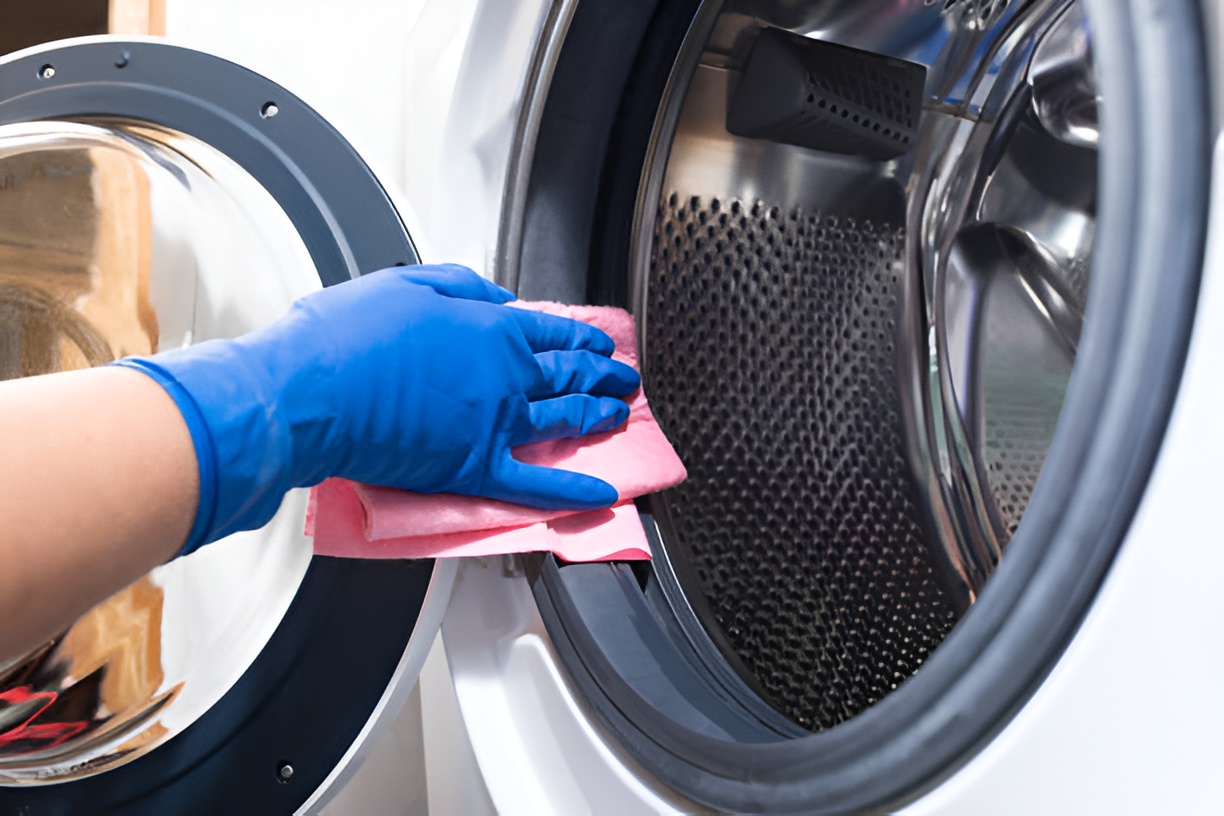
- Choose your cleaner: Use a soft cloth or sponge with either white vinegar, mild soap, or a gentle commercial cleaner.
- Front-load washers: Pay special attention to the rubber gasket around the door. Mold and mildew love to hide in the folds. Pull the rubber back gently and wipe every fold.
- Top-load washers: Focus on the drum walls and under the lid, where detergent and water residue can accumulate.
- Dry the door and drum: After wiping, leave the door open for at least an hour to let moisture evaporate. This helps prevent mold growth.
Pro tip: For extra freshness, add a few drops of tea tree or lavender essential oil to your cleaning cloth—it has mild antibacterial properties.
4. Run a Cleaning Cycle
Running a dedicated cleaning cycle ensures your washer is sanitized and free from residues.
Natural cleaning method:
- Add 2 cups of white vinegar to the detergent drawer.
- Run the washer on the hottest and longest cycle.
- After that cycle, sprinkle ½ cup of baking soda directly into the drum and run another hot cycle.
Chemical cleaning method:
- Follow the instructions on your washing machine cleaner package.
- Most commercial cleaners require placing a tablet or liquid in the drum and running a hot cycle.
- Run an extra rinse cycle if needed to remove any lingering cleaner residue.
Pro tip: For front-load washers, you can add the cleaning solution to both the drum and gasket to reach hidden areas.
5. Clean Filters and Hoses
Filters and hoses are often overlooked but critical for proper washer function.
- Lint and debris filters: Remove and rinse under running water. Scrub with a soft brush if needed.
- Drain pump filter: Check your manual for the location. Debris here can cause persistent odors or drainage problems.
- Hoses: Inspect for blockages, kinks, or mineral deposits. Flush with warm water if necessary.
- Replace damaged hoses: Hoses older than 5 years, or with cracks, should be replaced to prevent leaks.
Pro tip: Keep a spare set of hoses handy—they’re inexpensive and replacing them is easy preventive maintenance.
6. Final Touches
The finishing steps ensure your machine stays clean longer.
- Wipe the exterior: Use a damp cloth to clean the control panel, top, and sides of your washer. Avoid harsh chemicals that could damage surfaces.
- Keep the door slightly open: Between washes, leave the door ajar to allow air circulation and prevent mold growth.
- Schedule monthly quick wipe-downs: A few minutes each month to wipe the drum, gasket, and drawer keeps your washer in top shape.
How to Remove Odors from a Washing Machine
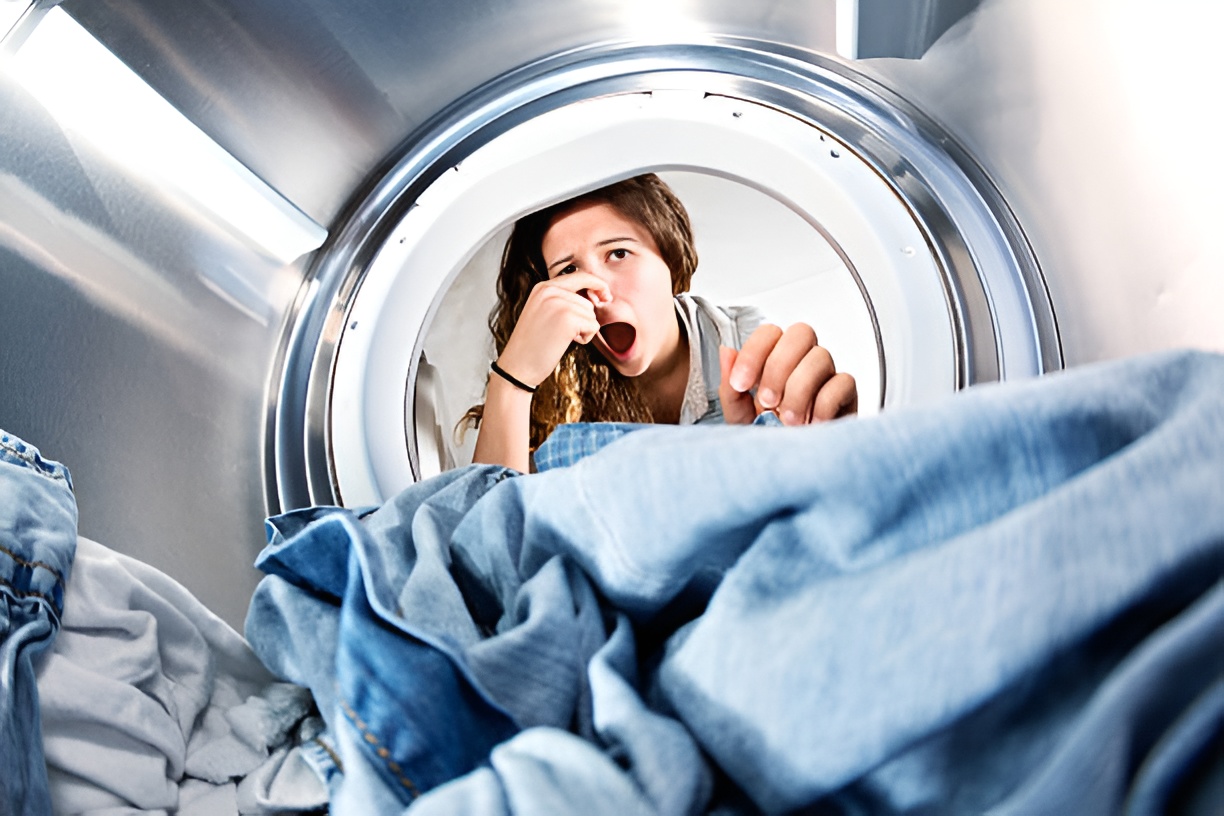
Even with regular cleaning, odors can persist. Here’s how to tackle them:
- Hot water cycle with vinegar: Kills bacteria, loosens residue, and neutralizes odors.
- Baking soda scrub: Sprinkle ½ cup into the drum and run a hot cycle to absorb lingering smells.
- Lemon juice or essential oils: Add natural freshness and antibacterial properties.
- Check the drain pump filter: Tiny debris caught here can produce bad smells over time.
Pro tip: Odors are often a sign of hidden mold or residue, so regular deep cleaning is key.
How to Handle Mold and Mildew
Front-load washers are especially prone to mold in the rubber gasket.
- Wipe down the gasket: Use a mixture of 1 part vinegar to 1 part water or a gentle bleach solution.
- Clean folds and crevices: Pull back the rubber seal and scrub with a toothbrush.
- Dry thoroughly: Mold thrives in moisture, so make sure the gasket is completely dry.
- Preventive measures: Leave the door open, don’t overload your washer, and use the recommended detergent amounts.
Pro tip: For stubborn mold, a paste of baking soda and water applied to the gasket, left for 10 minutes, then scrubbed off, works wonders.
How to Deal with Hard Water and Soap Scum
Hard water can leave mineral deposits, soap scum, and reduce washer efficiency.
- Vinegar soak: Run an empty cycle with 2 cups of white vinegar to dissolve mineral buildup.
- Commercial descaler: Follow the manufacturer’s instructions for areas with heavy limescale.
- Adjust detergent usage: Using too much detergent contributes to residue. Stick to recommended amounts.
Pro tip: Installing a water softener or using liquid detergent can help reduce future buildup in hard water areas.
Quick Daily and Weekly Maintenance Tips
- Wipe drum, door, and gasket after each use.
- Remove and rinse detergent drawers weekly.
- Check for debris in the filter monthly.
- Keep the door slightly open to avoid trapped moisture.
- Avoid overloading the machine, which can cause excess moisture and residue.
Small, consistent habits go a long way in preventing deep cleaning headaches.
FAQs About Cleaning Washing Machines
Can I use bleach to clean my washing machine?
Yes, bleach can disinfect and remove mold. Use sparingly and follow the manufacturer’s instructions.
Is vinegar safe for all machines?
Yes, vinegar is safe for most washers, but avoid excessive use on rubber seals over time.
How long should a cleaning cycle take?
Hot water cycles with vinegar or commercial cleaners typically last 1–2 hours.
Can I use baking soda and vinegar together?
Yes, but it’s best to use them in separate steps rather than combining, as the chemical reaction neutralizes some cleaning power.
How can I prevent future odors?
Leave the door open, avoid overuse of detergent, clean the gasket regularly, and schedule monthly maintenance cycles.
Wrapping It Up
Cleaning your washing machine doesn’t have to be complicated or time-consuming. By understanding your machine type, using natural or chemical cleaners safely, and following a regular maintenance schedule, you can prevent odors, remove mold and residue, and extend the life of your washer. Whether you have a front-load or top-load machine, a few simple steps each month will keep your laundry fresh, your machine efficient, and your home healthy.
A clean washing machine isn’t just about appearance—it’s about protecting your clothes, your appliance, and your home. Start with one deep cleaning session today, and maintain it regularly to make laundry day a fresher, easier experience.